DSCSA Requirements for Pharmacies, Dispensers, Distributors and Med Spas
The Drug Supply Chain Security Act (DSCSA) is transforming how prescription drugs are tracked, verified, and exchanged across the pharmaceutical supply chain. Designed to protect patients from counterfeit, stolen, or unsafe medications, the law requires organizations that handle prescription drugs to maintain secure, interoperable electronic traceability systems.
While many organizations are aware that DSCSA applies to large pharmaceutical distributors, fewer realize that pharmacies, dispensers, and even medical spas can fall under the same compliance requirements.
Understanding these obligations is critical as the FDA moves toward full electronic traceability enforcement.
What is the DSCSA?
The Drug Supply Chain Security Act, enacted in 2013 as part of the Drug Quality and Security Act, establishes a nationwide system for tracking and tracing prescription drugs as they move through the supply chain.
The goal is to ensure that:
• Drugs are authentic and safe
• Counterfeit or diverted products are quickly identified
• Trading partners can trace products back to their source
• The entire supply chain operates on interoperable electronic systems
The final phase of DSCSA requires full electronic product tracing using serialized identifiers and EPCIS data exchange between authorized trading partners.
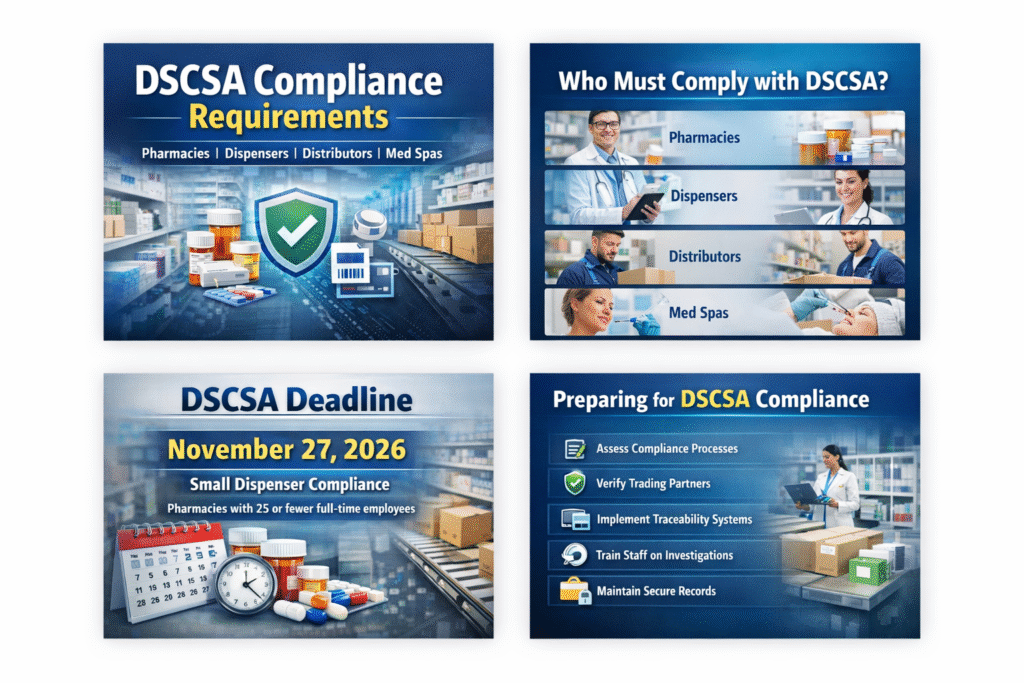
Who Must Comply with DSCSA
DSCSA applies to all authorized trading partners involved in the handling of prescription drugs, including pharmacies, dispensers, wholesale distributors, and certain healthcare providers.
Pharmacies
Retail pharmacies, hospital pharmacies, and specialty pharmacies must maintain transaction records and be able to verify products upon request.
Pharmacies are required to:
- Receive and store transaction data (TI, TH, TS)
- Verify suspect or illegitimate products
- Only purchase from authorized trading partners
- Maintain records for 6 years
- Participate in electronic product tracing systems
Dispensers
Dispensers include entities that provide medications to patients, such as:
- Hospital pharmacies
- Clinics
- Healthcare providers that dispense drugs
- Some medical practices
Dispensers must ensure they can trace medications received and respond to verification requests if a product is suspected to be illegitimate.
Wholesale Distributors
Wholesale distributors face some of the most extensive DSCSA obligations.
They must:
- Exchange serialized transaction data electronically (EPCIS)
- Verify returned products
- Investigate suspect products
- Maintain secure product tracing systems
- Only transact with authorized trading partners
Distributors must also ensure their trading partners are licensed and verified.
Medical Spas (Med Spas)
Many med spas are unaware they may fall under DSCSA compliance when they purchase and administer prescription drugs such as Botox, Dermal fillers, Injectable medications, Certain hormone or specialty therapies
This means med spas may need to:
- Maintain transaction records for drugs received
- Verify product identifiers if requested
- Investigate suspect products
- Ensure drugs are sourced from authorized trading partners
DSCSA Deadline
The FDA has been gradually implementing DSCSA requirements since 2015. The final phase requires fully interoperable electronic traceability systems across the entire supply chain.
Organizations that have not yet implemented electronic compliance solutions risk operational disruptions or regulatory scrutiny.
A key upcoming deadline is: November 27, 2026
This date marks the end of the FDA enforcement exemption for small dispensers.
A small dispenser is defined as a pharmacy with 25 or fewer full-time employees (pharmacists and technicians) as of November 27, 2024.
After this deadline, small dispensers must fully comply with DSCSA requirements for electronic product tracing and verification.
Preparing for DSCSA Compliance
If your organization handles prescription drugs, now is the time to ensure your systems are ready.
Key steps include:
- Assess your current compliance processes
- Verify authorized trading partner credentials
- Implement electronic traceability systems
- Train staff on suspect product investigations
- Maintain secure transaction records