







FDA Issues DSCSA Warning Letter in Pure Indulgence Med Spa Case - A Wake-Up Call for Medical Spa
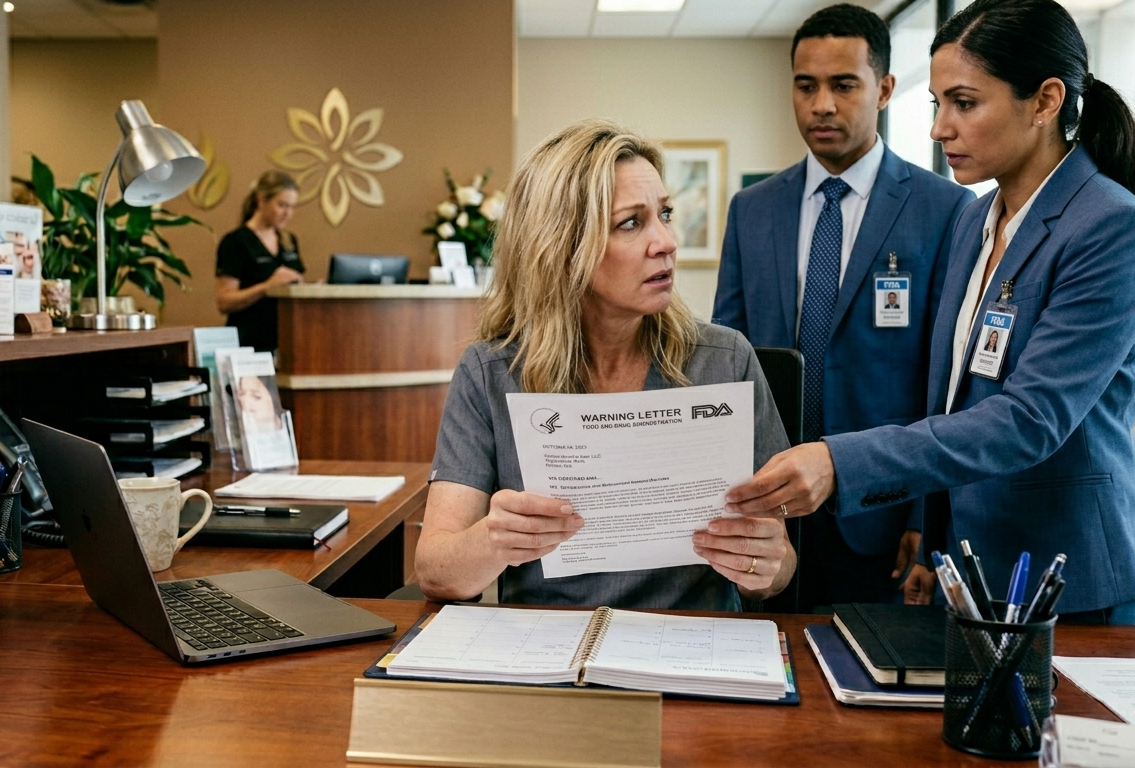
Earlier this year, the FDA made waves with its first publicly documented Drug Supply Chain Security Act (DSCSA) inspection observation issued to a dispenser. Now, that same case has taken a significant turn.
Earlier, the FDA issued a Form 483 following an inspection of a medical spa’s handling of Botox. Now, that same case has escalated to a formal Warning Letter, signaling a clear step forward in enforcement.
A Quick Recap: What Happened During the Initial Inspection
In December 2025, FDA inspected Pure Indulgence Aesthetics, a med spa in Texas, for their handling of Botox (onabotulinumtoxinA). During the inspection investigators identified two key concerns related to DSCSA compliance:
- Transactions with unauthorized trading partners
The number of units administered did not align with the number of units purchased from verified sources, raising concerns about sourcing. - Products lacking proper identifiers
An unlabeled vial found in the facility’s trash was confirmed to contain botulinum neurotoxin type A. The clinic could not produce any associated labeling or product identifier, raising compliance concerns under DSCSA.
At the time, these findings were documented in a Form FDA 483, which outlines potential violations observed during an inspection.
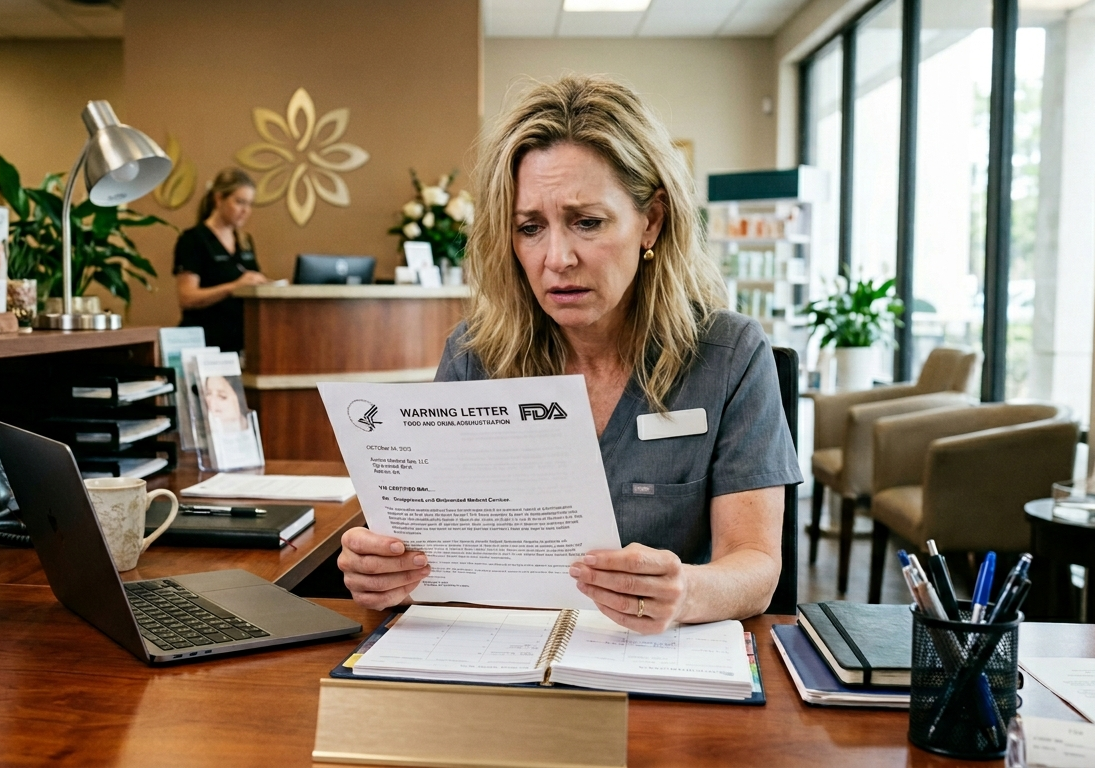
What’s Changed: From FDA 483 to Warning Letter
Following the inspection, the organization had the opportunity to respond and outline corrective actions. However, the FDA determined that the response was insufficient, leading to the issuance of a Warning Letter.
This escalation is significant.
A Form 483 highlights concerns.
A Warning Letter indicates that those concerns were not adequately resolved and that the agency expects immediate and verifiable corrective action.
In this case, the FDA cited gaps such as:
- Lack of documented corrective measures
- No clear procedures for verifying trading partners
- Inability to reconcile discrepancies between purchased and administered products
- Limited supporting evidence to demonstrate compliance improvements
What Is an FDA Form 483—and When Is It Issued?
An FDA Form 483 is issued at the end of an inspection when investigators identify conditions that may potentially violate the Food, Drug, and Cosmetic (FD&C) Act or related regulations. In simple terms, it’s the FDA’s way of documenting observations where practices or conditions could impact product safety, quality, or compliance. These observations are based on the investigator’s judgment and are intended to highlight areas that require attention.
What Is the Purpose of a Form 483?
The primary goal of a Form 483 is to inform company leadership of issues that need to be addressed.
It also serves as an opportunity for the organization to:
- Review the identified concerns
- Develop a corrective action plan
- Respond to the FDA—typically in writing—with details on how the issues will be resolved
Timely and well-documented responses are critical. In many cases, how a company responds to a Form 483 can determine whether the issue is resolved—or escalates further.
What Is an FDA Warning Letter?
An FDA Warning Letter is a formal notice issued when the agency determines that significant violations have not been adequately addressed following an inspection. Unlike a Form 483, which outlines observations, a Warning Letter signals that the FDA expects immediate corrective action backed by clear documentation. It also indicates that the agency may take further enforcement steps such as product seizures or injunctions—if the issues are not resolved promptly.
In short, it’s not just a warning—it’s a clear indication that compliance gaps remain and must be corrected without delay.
Why This Case Escalated to a Warning Letter
In this case, the escalation wasn’t just about what the FDA found during the inspection—it was about what happened afterward. After receiving the Form 483, the organization responded, but the FDA determined that the response lacked the depth and evidence needed to demonstrate real corrective action. Rather than providing detailed procedures or documented changes, the response focused more on intentions for future compliance.
Additionally, concerns were raised around broader operational controls such as how products were handled, documented, and sourced particularly in cases where detailed protocols or verification records were missing.
The underlying issue wasn’t just non-compliance—it was the lack of verifiable systems and documentation to prove compliance.
Why This Matters Beyond Medical Spas
It would be easy to view this as a case specific to med spas—but that would be a mistake.
The DSCSA requirements at the center of this case apply broadly across the pharmaceutical supply chain, including:
- Pharmacies
- Dispensers
- Distributors
- Healthcare providers handling prescription products
These are not future expectations—they are current obligations.
Don’t risk your practice. Stay DSCSA compliant with industry-leading solutions from InfiniTrak. Book a demo today and see how you can simplify DSCSA compliance with confidence.